
Home › What Your Garage Door Is Trying to Tell You: A Sound-by-Sound Guide
What Your Garage Door Is Trying to Tell You: A Sound-by-Sound Guide
Garage doors rarely fail in silence. Weeks or months before the breakdown, most doors start making a new noise — a squeal that was not there in spring, a pop at the same spot in every cycle, a rumble that shakes the kitchen floor. Learning to read those sounds is the cheapest diagnostic tool a homeowner owns, and it is the difference between a service visit and an emergency call.
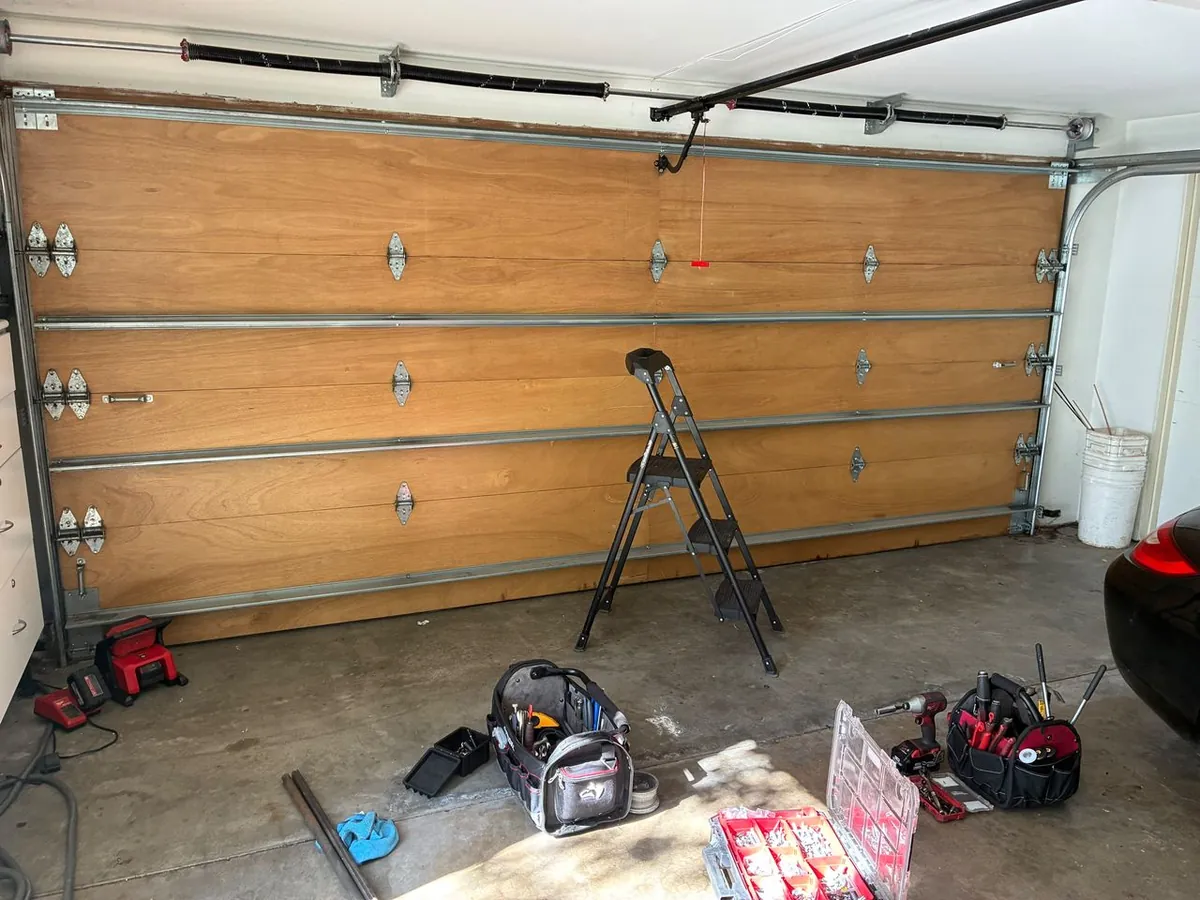
Squealing and Chirping: Dry Hardware Asking for Lubricant
A high squeal or chirp, usually worst at the start of travel, almost always means dry metal-on-metal contact: hinges, roller bearings, or the spring itself flexing without lubrication. The fix is a proper garage-door lubricant (not the all-purpose spray that attracts grit) applied to hinges, rollers and springs. If squealing returns within weeks, a roller bearing is failing rather than dry — that roller is on its way out.
Grinding: Stop and Look Before You Run It Again
Grinding points at the opener or the drive: a worn opener gear, a fraying belt or chain dragging, or rollers that have seized and are being dragged along the track. Keep running a grinding door and a small part failure becomes a damaged door. Unplug the opener, and if the door moves roughly by hand too, the problem is in the door hardware — cables, rollers and tracks all belong on the suspect list.
Popping and Cracking: Sections, Springs and Temperature
A single loud bang is the classic sound of a torsion spring breaking — unmistakable, and the door will usually refuse to open afterward or lift only a few inches with a groan. Do not force it; the opener cannot safely lift a door whose spring has let go. Repeated smaller pops at the same point in travel are different: often a section binding in the track, a loose hinge, or a roller with a flat spot. Our guide to the signs a spring is breaking covers the visual clues that pair with these sounds.
Rattling and Rumbling: Loose and Worn Running Gear
A door that rattles like a freight train has usually accumulated small looseness everywhere: hinge bolts backing out, worn steel rollers clattering in the track, a chain drive stretched and slapping. A tune-up — tighten, lubricate, replace the worst rollers with sealed nylon ones — transforms these doors. Homeowners are routinely surprised how quiet a twenty-year-old door can run.
Clicking, Humming and Buzzing: The Opener Is Talking
Clicks without movement often mean the opener is trying and being stopped: misaligned safety sensors, a tripped lock feature, or a logic board fault. A hum with no travel can be a failed capacitor or a stripped gear. A buzzing wall button or flickering light points to wiring. Opener electronics are repairable more often than people assume — see our opener repair service for what we check before ever recommending replacement.
Scraping: Something Is in the Way or Out of Line
A scrape that repeats at the same height in every cycle means metal is meeting metal where it should not: a bent track section, a shifted roller bracket, weatherstripping torn loose and dragging, or the door drifting out of plumb. Find the shiny spot on the track — the door will show you exactly where it is rubbing.
The Sounds That Mean Stop Now
- A single explosive bang, especially if the door then will not open
- Grinding combined with the door moving unevenly or tilting
- A cable visibly hanging loose or a door sitting crooked in the opening
- Any noise paired with the smell of hot electrics from the opener
Everything else can usually wait for a scheduled visit — but do schedule it. Doors almost always whisper before they shout. If your door has developed a new voice and you would like a professional translation, call (888) 831-4676 or book a visit online: a tune-up today is the cheapest garage door repair there is.
Frequently Asked Questions
My garage door squeaks only in winter. Is that normal?
Mostly, yes — cold thickens old lubricant and contracts metal, so marginal hardware complains in January that stayed quiet in July. A seasonal tune-up with fresh lubricant usually settles it; persistent winter squealing from one spot suggests a roller bearing on its way out.
The door banged loudly once and now will not open. What happened?
That is the textbook signature of a broken torsion spring. Leave the opener alone — forcing it can burn out the motor — and call for spring replacement. It is the most common major repair we perform and usually a same-day fix.
How quiet should a healthy garage door be?
You should hear a smooth mechanical hum and the soft roll of the door — conversation in the next room should not have to pause. If your door announces itself through the whole house, it is asking for service, not patience.
Need Garage Door Help in Maryland?
Same-day service, free estimates, and a licensed technician on the way — call now or book online.
Request Service
Request a Call Back
Send your details and we'll call you right back. For emergencies, calling is fastest — we're on the line 24/7 at (888) 831-4676.
- Free on-site estimate before any work begins
- Licensed & insured, background-checked technicians
- Same-day service across Maryland & DC